
Turning a new brand into a scalable digital experience
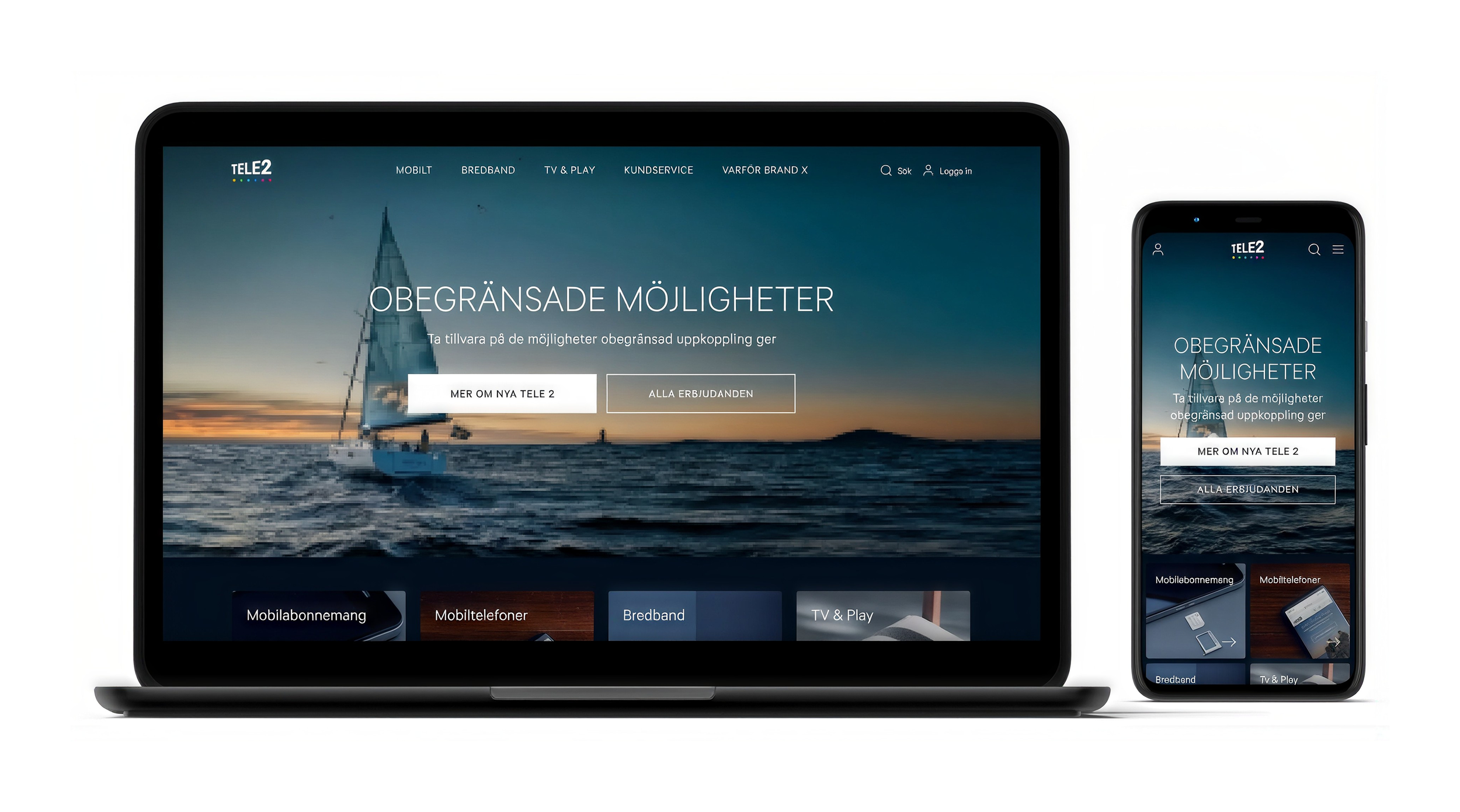
Concept illustrating the Tele2’s new experience across web, app and self-service.
Role
Head of UX / Design Director for the initiative
Company
Tele2 — telecom & digital services
Team
UX and product designers across distributed product teams
Focus
Brand-to-product transformation, design direction and design systems
Context
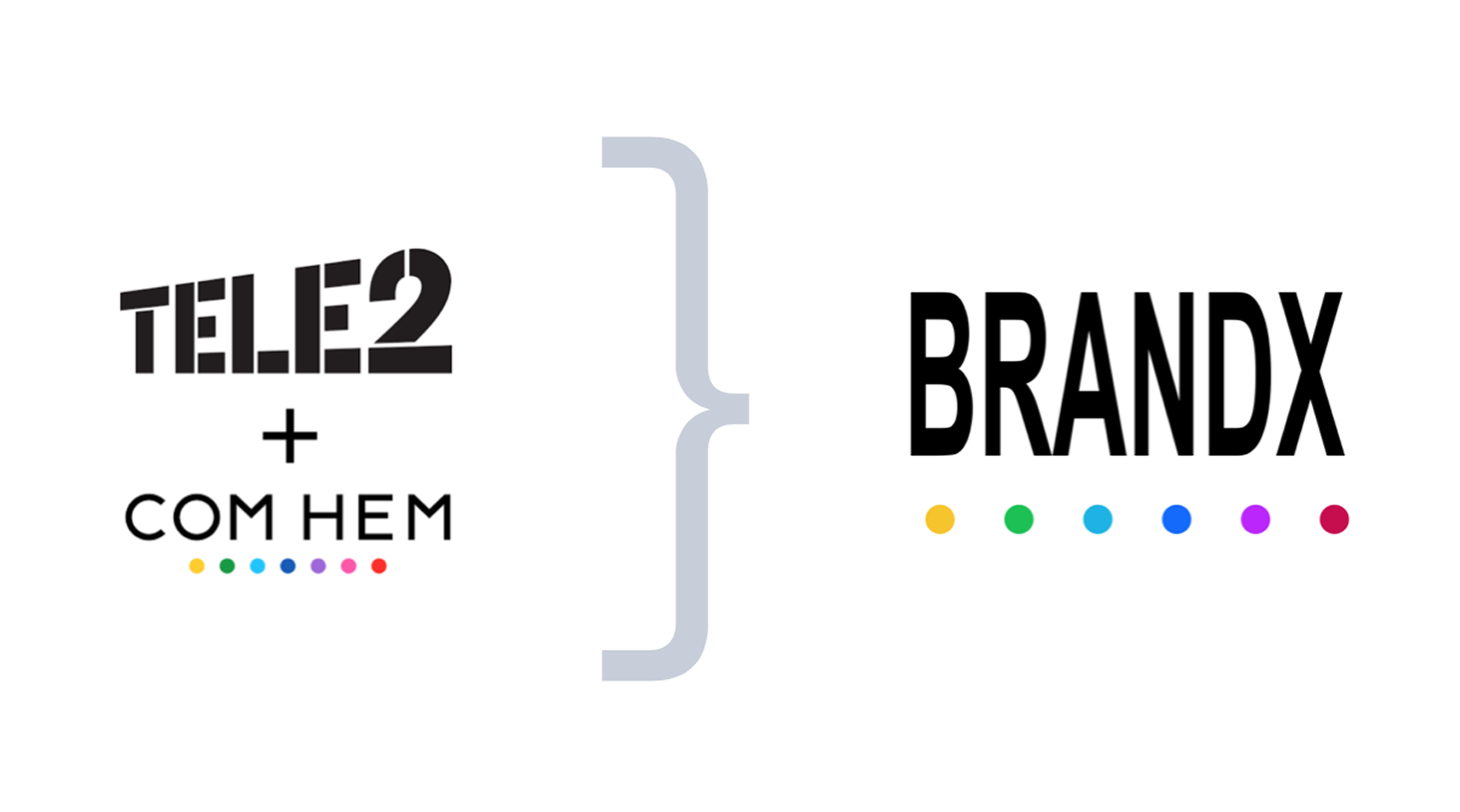
In 2020, Tele2 and Com Hem were brought together under one Tele2 brand. The new identity was bold and distinctive, while the digital products still reflected different legacy brands and experiences.
Our challenge was to translate the new brand into a coherent product experience across web, app and self-service — balancing brand expression with usability, accessibility and conversion.
UX and product design were organisationally part of Brand, while designers worked across cross-functional product teams. My role was to bridge brand and product and create a direction that could scale across teams and digital experiences.
My role
I led the digital design side of the transformation, connecting brand direction with product needs and technical realities.
My responsibilities included:
Setting the digital experience and visual direction
Translating brand strategy into product design principles
Connecting Brand, Product and Technology around a shared direction
Establishing scalable UI foundations and a shared design system
Staying hands-on in early concepts and key experience decisions
Building the Team & Design Practice
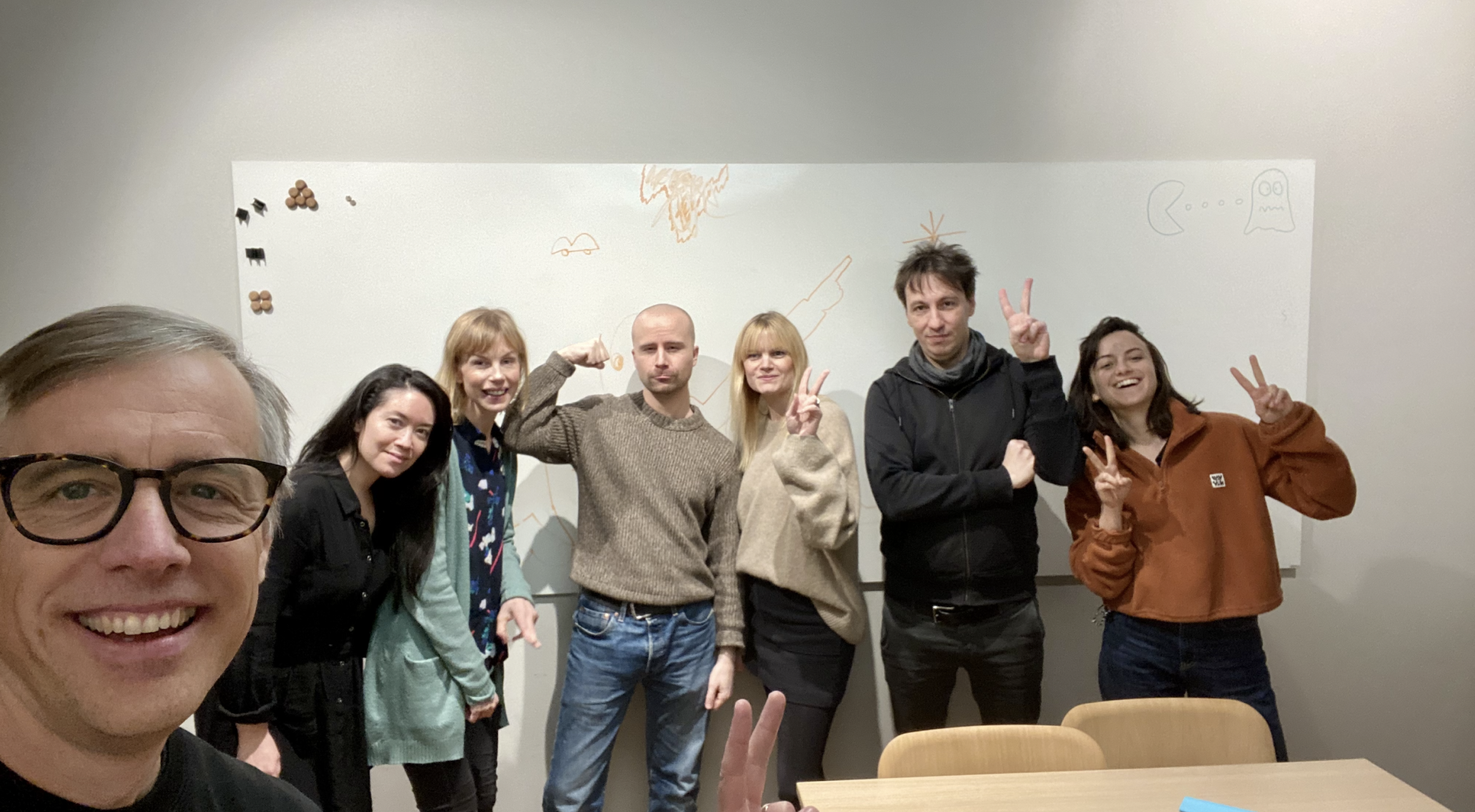
Parts of the design team during a kickoff, shaping the vision.
One of my first priorities was building a strong in-house design team. During the first year, we grew from three consultants to seven in-house product designers, working across multiple product teams alongside an existing UX researcher.
Growing people and capabilities
I introduced a shared design competency framework to support individual development and clarify career progression. Through regular 1:1s, we combined feedback on ongoing work with longer-term goals, while using the framework to identify strengths and development needs across the team.
Alongside this, I strengthened our design practice through:
Craft and collaboration – Introduced design critiques and shared forums to raise design quality and encourage learning.
Ownership and empowerment – Gave designers greater ownership and influence in cross-functional product teams.
Ways of working – Strengthened collaboration in product trios and introduced continuous discovery practices.
Together, these efforts helped build a stronger, more independent design team with greater influence on product direction.
Raising the product design bar
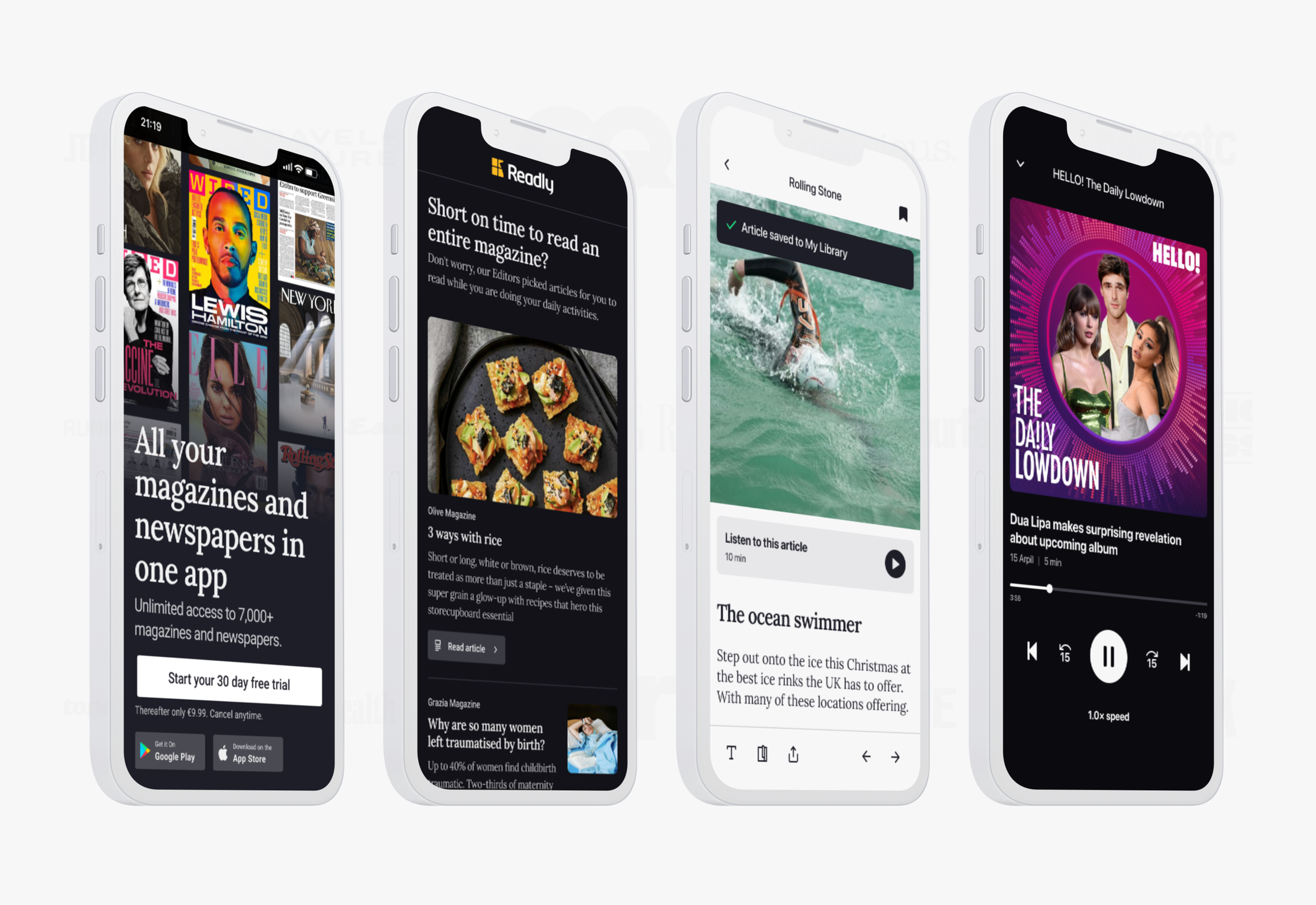
Key screens to illustrate the new coherent experience across touch points and user journeys.
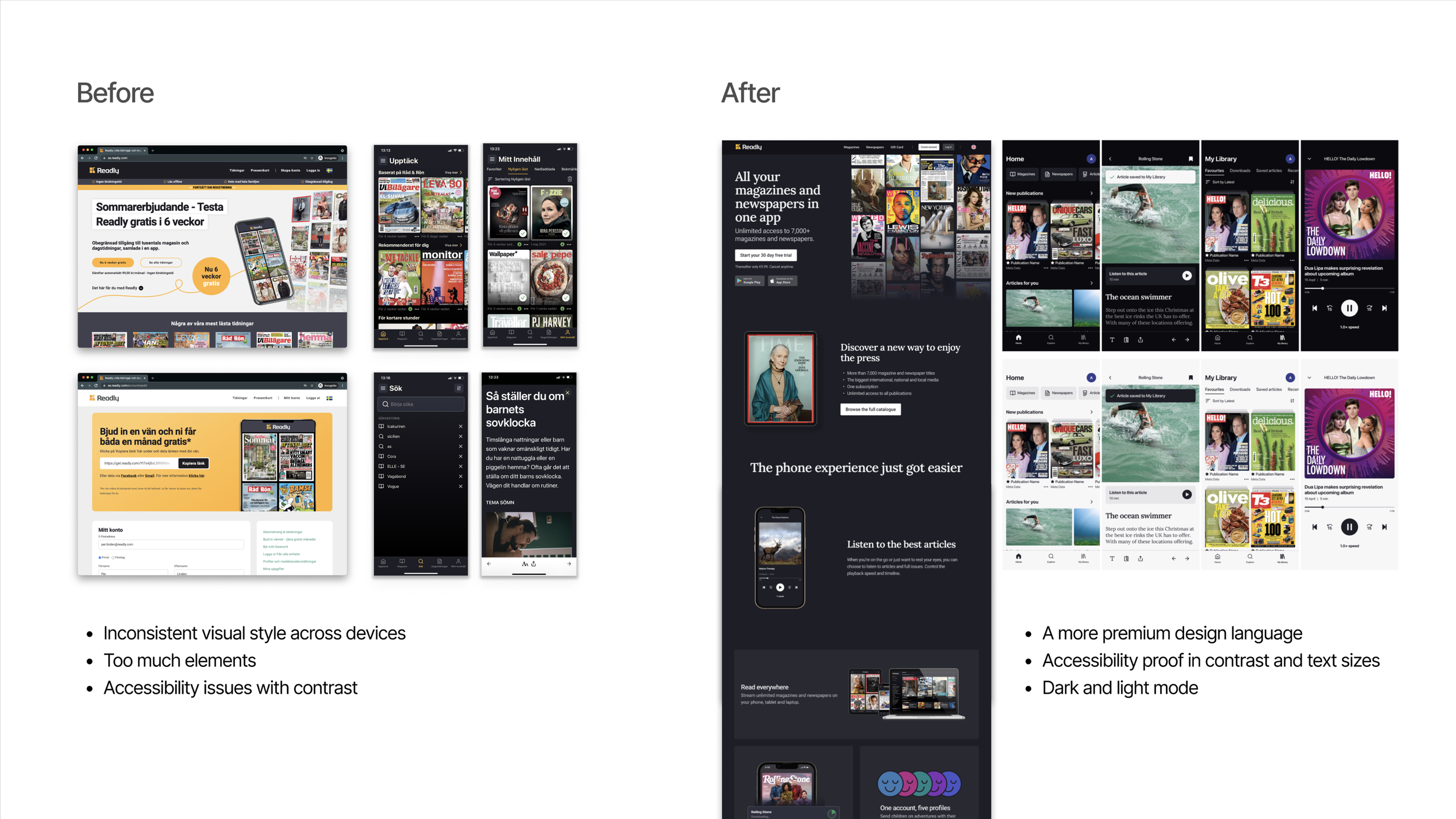
Visualisation of before and after state established in the Design Next level initiative.
Alongside building the team, I wanted to establish a clearer experience direction and shared quality bar across Readly’s products.
I initiated Design Next Level to bring mobile and web closer together and create a more coherent foundation for the consumer experience.
The focus was:
improving content discovery and navigation
aligning visual language across platforms
strengthening accessibility
consolidating the design system
This gave designers and product teams a shared direction for improving the experience while creating stronger foundations for future product development.
Introducing Continuous Discovery
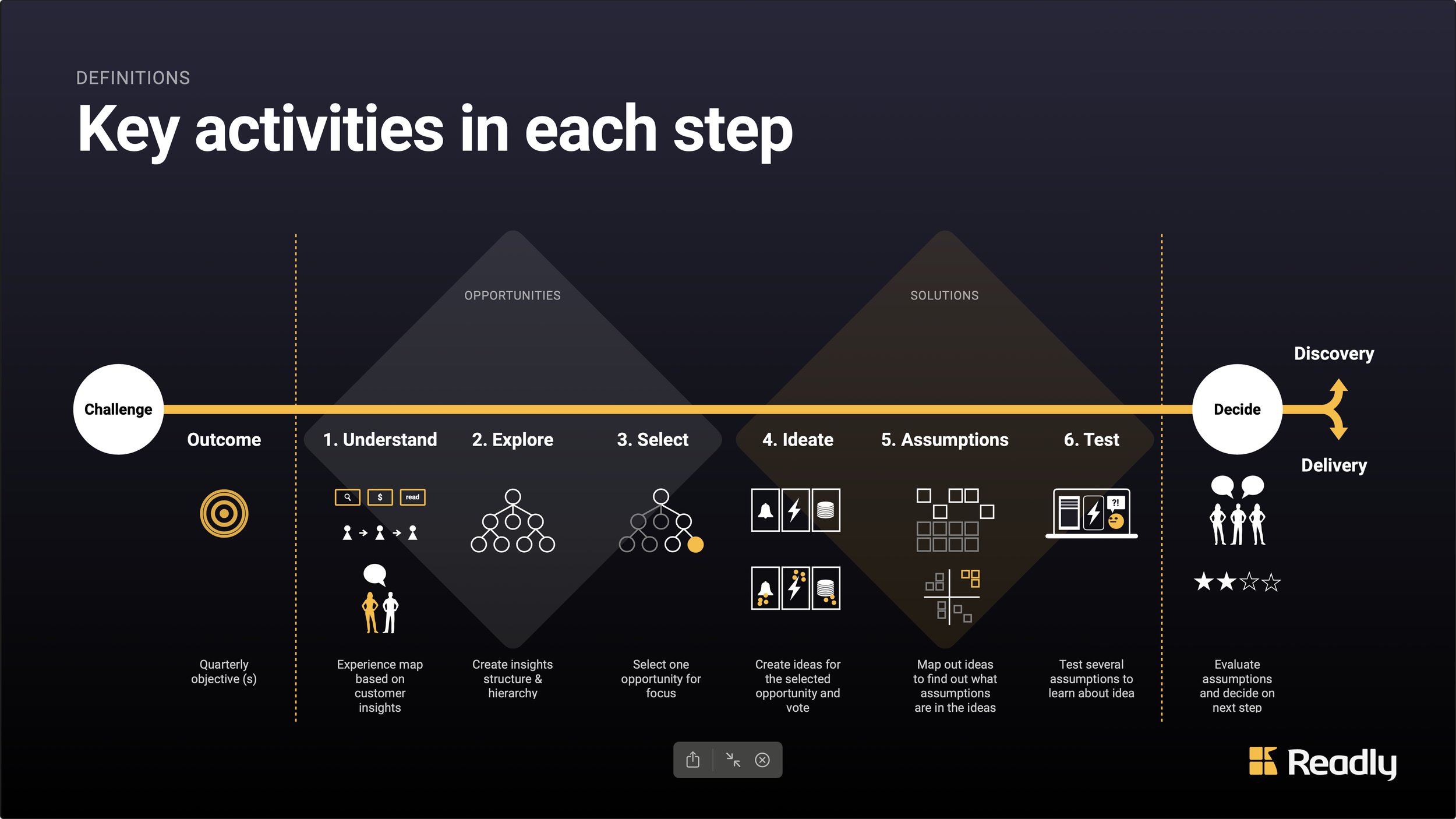
To move teams from solution-driven delivery towards stronger product discovery, we developed a shared continuous discovery playbook across the product organisation.
It connected product outcomes and user opportunities with ideation, prototyping and rapid experimentation — helping teams explore and validate ideas before committing to development.
My role was to establish the approach together with product leadership and help embed it into cross-functional ways of working.
Staying close to the craft — evolving the mobile experience
One strategic initiative brought these different parts of my role together. Mobile Fast Track explored how Readly’s mobile experience could evolve beyond replica magazines towards individual articles, better discovery, personalisation and audio.
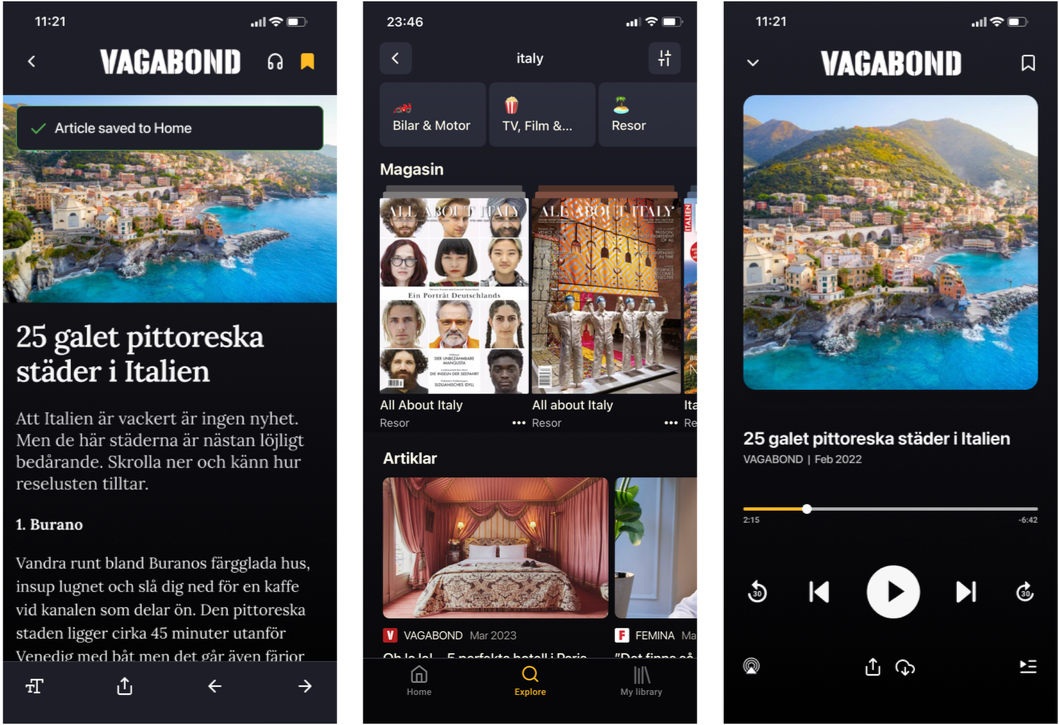
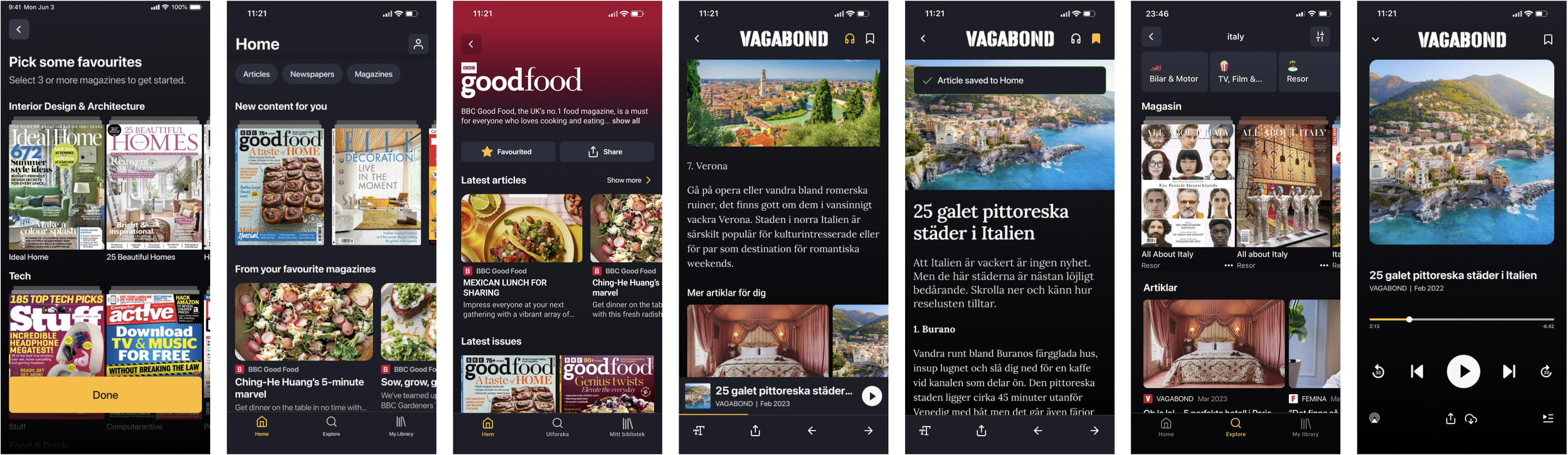
I worked hands-on on the experience direction, creating a vision prototype that explored how article-based reading, discovery and audio could come together in one mobile experience.
The prototype acted as a north star for product, design and engineering, helping teams align on the direction and break the vision into a sequence of releases.
One of the new capabilities was AI-generated audio, which required us to rethink how content could be discovered and consumed beyond traditional reading. The concept explored how reading and listening could coexist within the same experience.
My impact
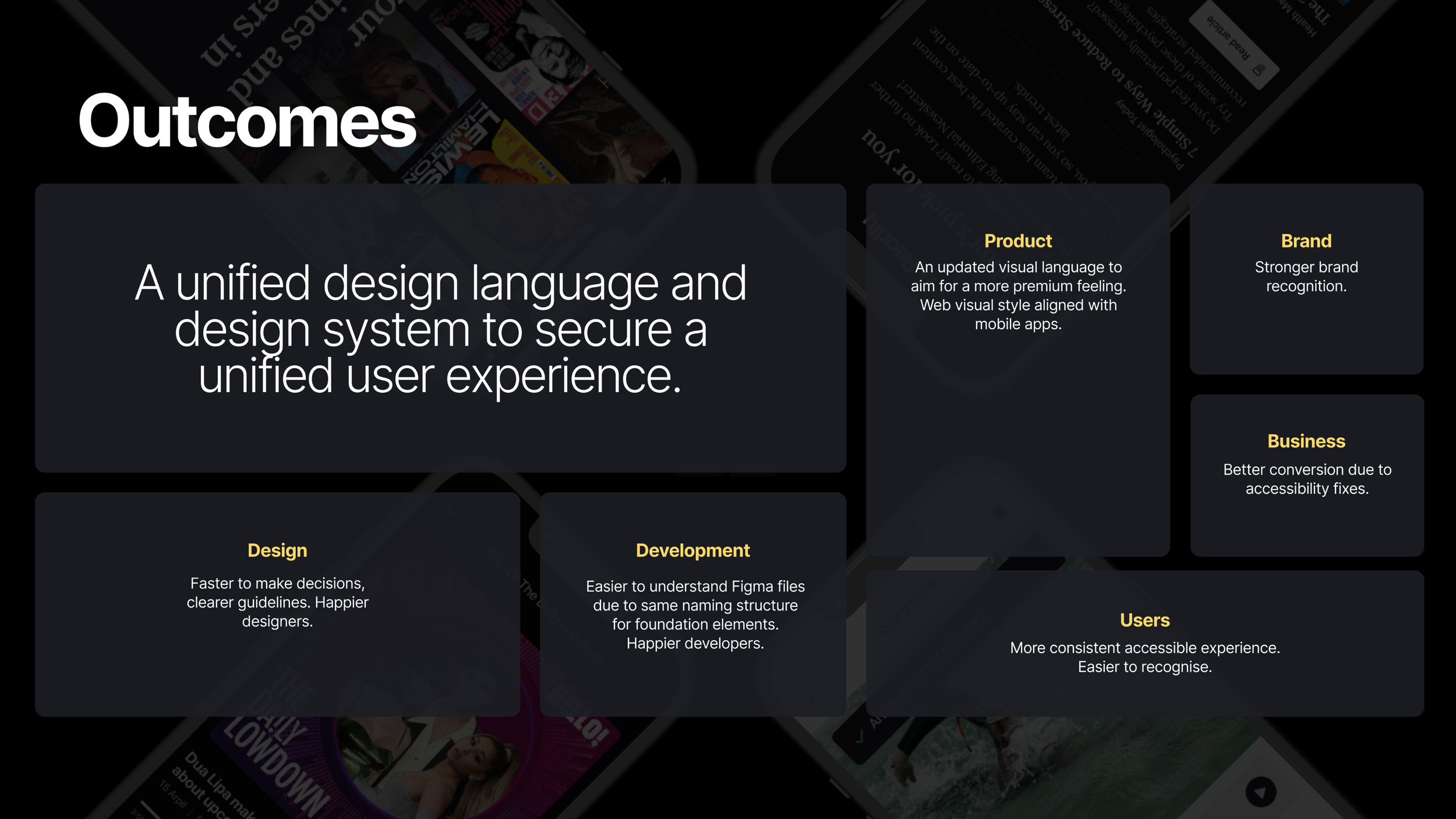
All work strengthened both the design team and its contribution to product development at Readly.
Growing talent – Supported a senior designer's progression into a UX Lead role and a junior designer's development to mid-level through structured coaching and clearer career expectations.
Building design capability – Grew the team from three consultants to seven in-house product designers, establishing stronger ownership and shared practices.
Strengthening product discovery – Introduced more continuous research and cross-functional collaboration, bringing design closer to early product decisions.
Creating product direction – Established a clearer experience vision and stronger design system foundations across platforms.
Evolving the product experience – Contributed to new capabilities including article-based reading and audio listening.