

Building a streaming experience across brand, product and platforms
Transforming Com Hem Play from a TV add-on into a standalone consumer streaming product.

Role
Design Director
Company
Com Hem — telecom & entertainment
Team
4-person design team across 6 digital platforms
Focus
Brand, product design, consumer experience and design leadership
Context
Com Hem Play had started as a companion service for TV customers. By 2019, the ambition had changed: it needed to become a standalone subscription product capable of competing in the rapidly growing streaming market.
We had six months to create a distinct brand and consumer experience, redesign the product across six platforms and launch a new purchase journey — while continuing to develop the existing service.
Design was organisationally part of Brand, while UX and product designers worked across cross-functional product teams. My role was to connect brand, product and technology around one coherent experience.

BEFORE: The old Com Hem Play experience was intentionally connected to the Com Hem brand.
My Role
As Design Director for the initiative, I combined design direction, team leadership and hands-on exploration:
Set the overall brand and product design direction
Built and led the multidisciplinary design team
Connected Marketing, Product and Technology around a shared experience vision
Facilitated strategic discovery and design workshops
Created early brand and product concepts hands-on
Coached designers and reviewed execution across platforms

AFTER: The new Comhem Play experience with a more unique branding and product design.
Connecting brand and product
The challenge wasn't simply to redesign an interface. Com Hem Play needed its own position in the market while still retaining enough connection to the parent brand.
I framed the work across three connected layers:
Brand — what the product should stand for
Identity — how that should be expressed
Product — how consumers should experience it
This gave Marketing, Product, Technology and Design a shared framework for making decisions across the transformation.

I defined a design strategy and lead activities within 3 areas: Brand, Identity and Product design to help the team with prio and framing.
Brand & Logo Direction
I facilitated an initial workshop with Marketing, Product and leadership to align on positioning, personality and experience principles.
I then worked hands-on exploring different directions for the identity and product expression — using early concepts to make the strategy tangible and give the team something concrete to react to.
We ultimately retained the connection to Com Hem while creating a more distinctive streaming identity around the Play symbol.

One of many monochrome explorations for the logo to help shaping the brand design direction

Early explorations of background colors in product design to help set cornerstones for colors in the brand.
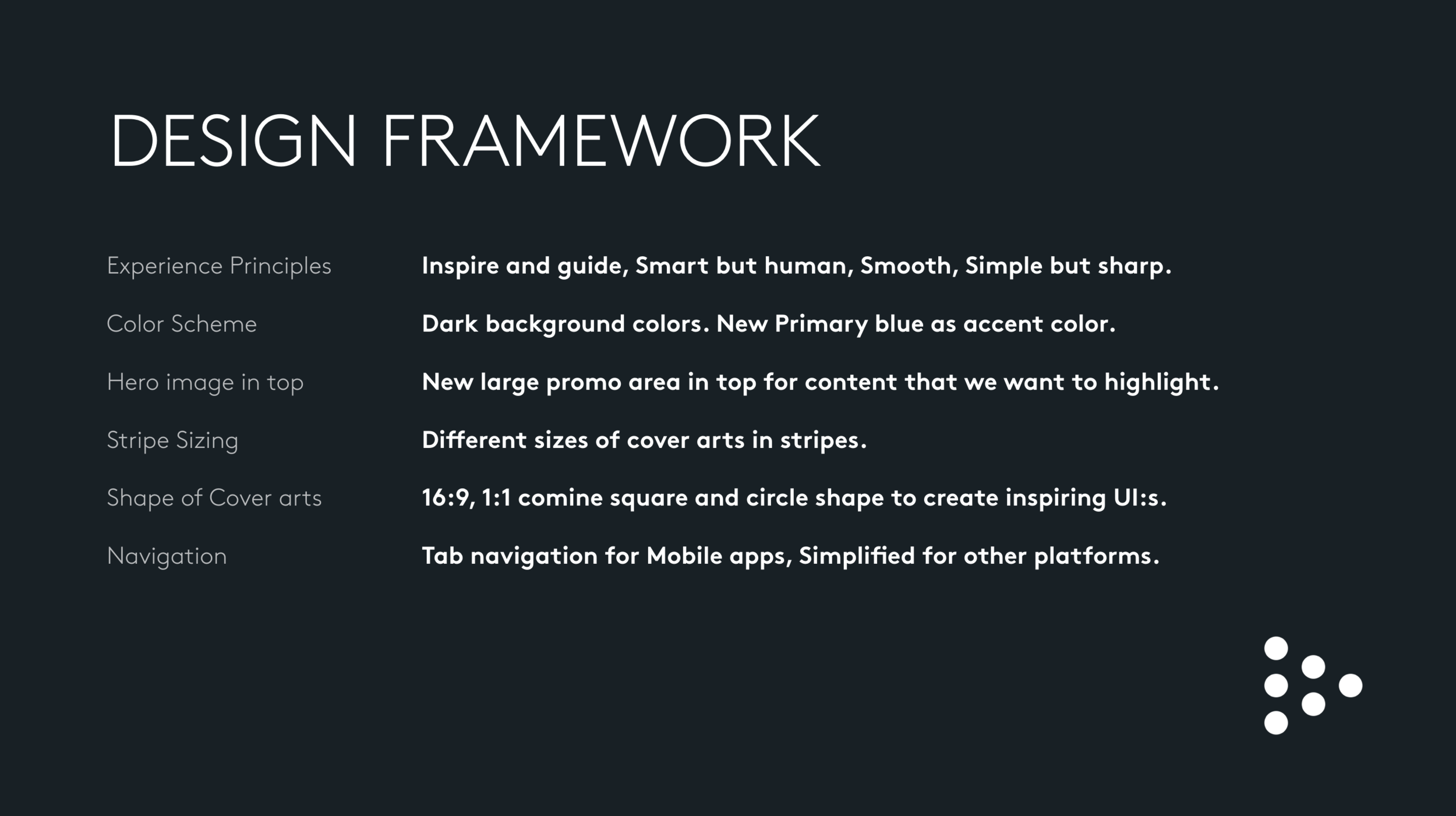
Framework for the product design to help designers keep focus and explore within the constraints.
Building and empowering the team
Once the direction was established, I staffed a multidisciplinary design team covering the full experience:
2 Product Designers — logged-in experience across platforms
1 UX Designer — web, acquisition and purchase journey
1 Visual Designer — brand identity and visual expression
My role shifted between design direction, coaching, facilitation and hands-on support — giving designers ownership while maintaining a coherent experience across the product.

The design team in action in workshops that helped us shape the new experience, and yes I was there as well, facilitating the work.
Designing through discovery
Product designers worked closely with Product and Technology to identify the most important problems and explore solutions before committing to delivery.
We established three experience principles to guide decisions:
Smart but human
Inspire and guide
Intuitive and smooth
Teams explored alternatives through design studios, prototypes and continuous user testing, while still delivering improvements to the existing product.

To discover the right solutions the team designed many ideas in cross functional design studio workshops and tested them on real users to understand what would be the best solution to deliver.
Simplifying the purchase journey
A key challenge was creating a standalone purchase journey without disrupting existing Com Hem customers.
I coached the UX designer leading the work, while Product, Design and Engineering mapped the different customer journeys and tested alternative flows before implementation.
This was deliberately a case where my role was to provide direction and unblock the team rather than design the solution myself.
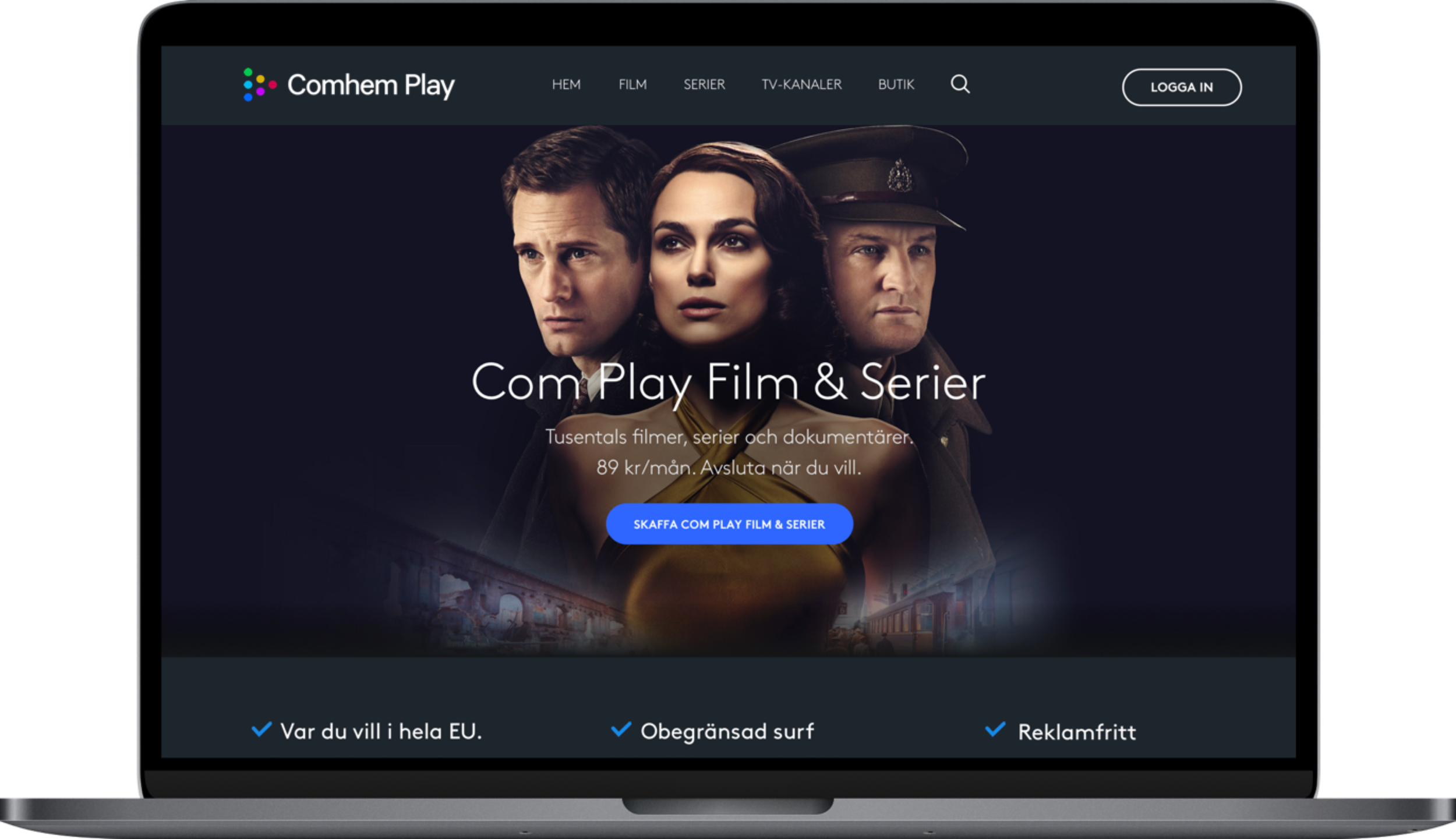
Concept design for Web Start page logged out experience in desktop resolution.
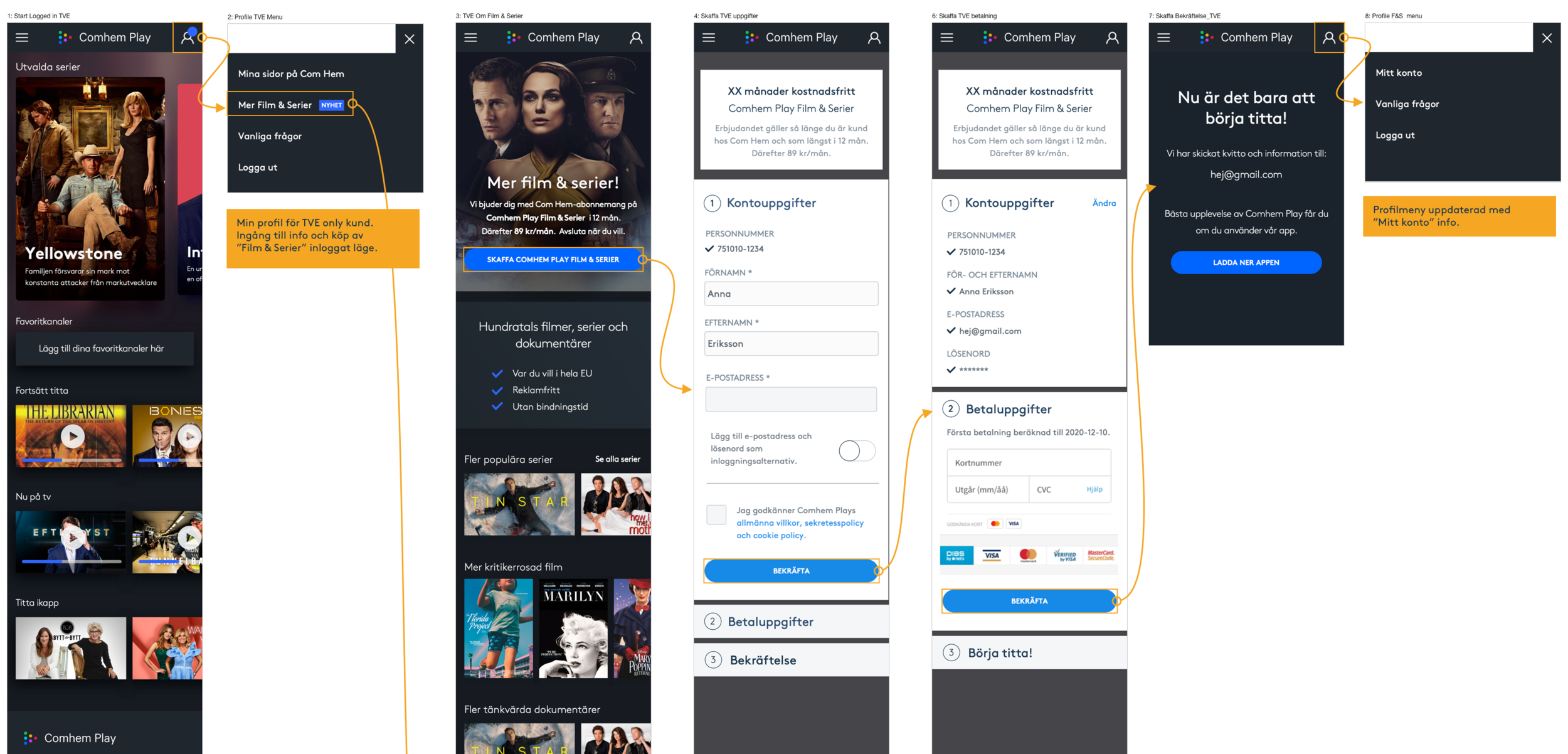
Clickable prototypes from screens like this were tested in mobile devices to get feedback from real users before taking decisions.

The User story map helped us understand the different user needs and actions needed internally when walking through the purchase flow for the new Comhem Play.
Scaling one experience across six platforms
In parallel with product development, we created a shared design system to translate the new experience consistently across:
Web · iOS · Android · Apple TV · Samsung Smart TV · Android TV
The goal wasn't pixel-level uniformity. It was to create a coherent product language that could adapt to different interaction models and platform conventions.
The Samsung Smart TV experience became one of the clearest expressions of the new direction.

The new Samsung Smart Tv experience is a good example on how the design evolved from the initial framework.
Impact
Consumer product
Transformed Com Hem Play from a bundled TV companion into a standalone subscription streaming experience.
Brand & experience
Established a distinct identity and coherent product language across six platforms.
Design capability
Built and led a multidisciplinary team and introduced shared principles, discovery practices and a cross-platform design system.
Business
Com Hem Play became Sweden's fastest-growing streaming service by summer 2020.

What I learned
Test the direction, not just the details. Early user feedback showed that we had simplified the start page too aggressively, allowing us to recalibrate quickly.
Direction creates autonomy. Clear experience principles and a shared visual framework allowed designers to explore independently without losing coherence across platforms.