
Scaling product design in a global content platform

Role
Head of Product Design
Company
Readly – global digital content platform
Team
Scaled the design team from 3 consultants to 7 in-house designers
Focus
Product strategy, discovery practices and platform experience
Context
Readly is a global content platform distributing thousands of magazines and newspapers across mobile and web products.
When I joined as Head of Product Design, the design capability was still small and largely consultant-driven, while the product organisation was growing and taking on more complex challenges.
A key challenge was improving content discovery and relevance across a large and constantly changing catalogue of editorial content.
Working on a large content platform required simplifying complex systems while still supporting powerful workflows behind the scenes.
The ambition was to strengthen design as a strategic capability within product development and improve the overall product experience for millions of readers worldwide.
My role
As Head of Product Design I was responsible for:
Building and scaling the in-house design team
Defining product design vision and experience direction
Partnering with product and engineering leadership on product strategy
Establishing stronger discovery practices and design processes
Improving design system foundations and cross-platform consistency
Building the organisation
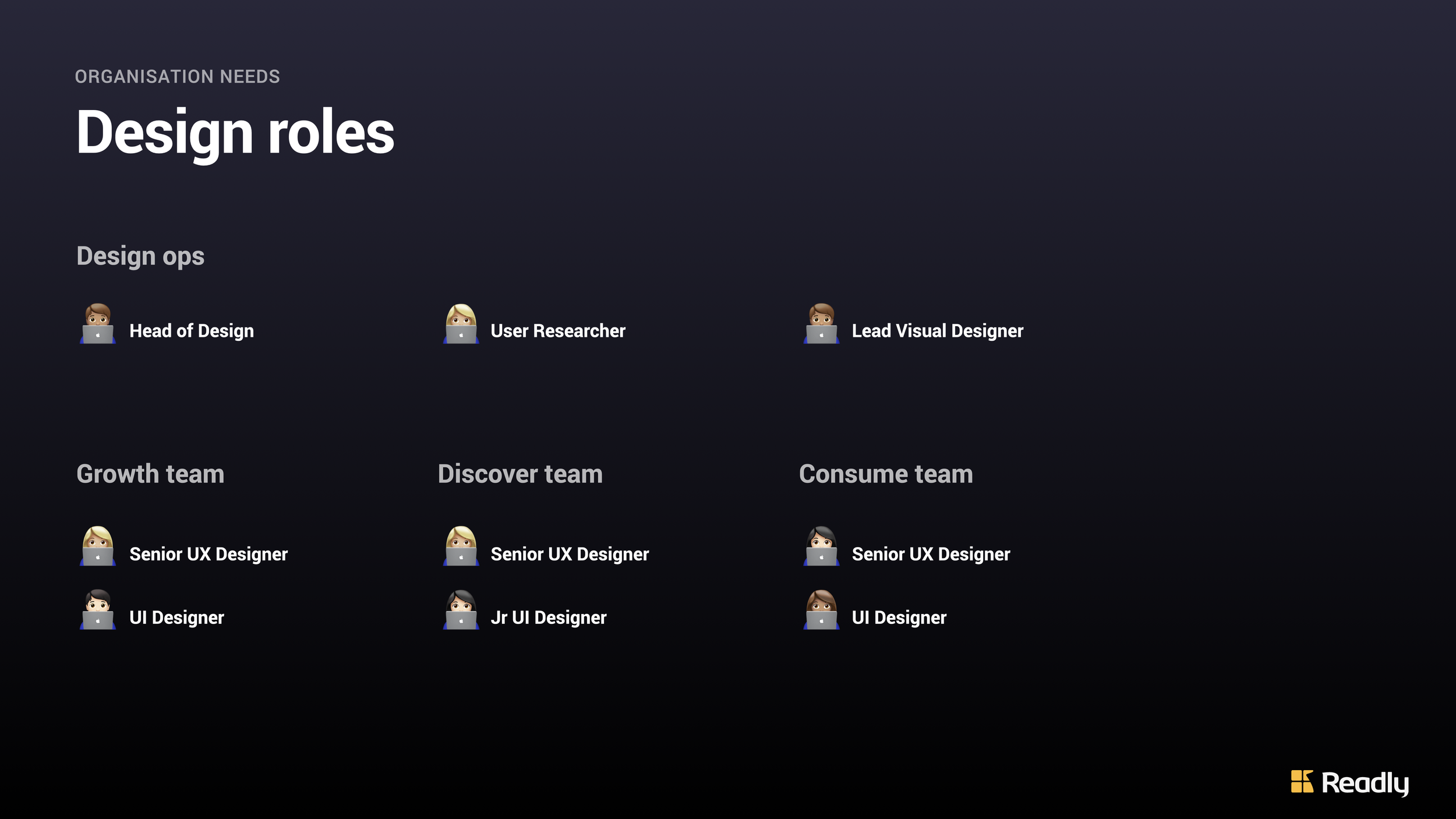
One of my first priorities was strengthening the design capability.
During the first year we grew the design team from three consultants to seven in-house product designers, working across multiple product teams together with an existing UX researcher.
Alongside recruitment, we introduced clearer ways of working across teams:
design critiques and craft rituals
stronger collaboration in product trios (product, tech, design)
shared discovery practices
clearer ownership of product areas
This helped position design as a more strategic partner within the product organisation.
Defining Product Design Direction
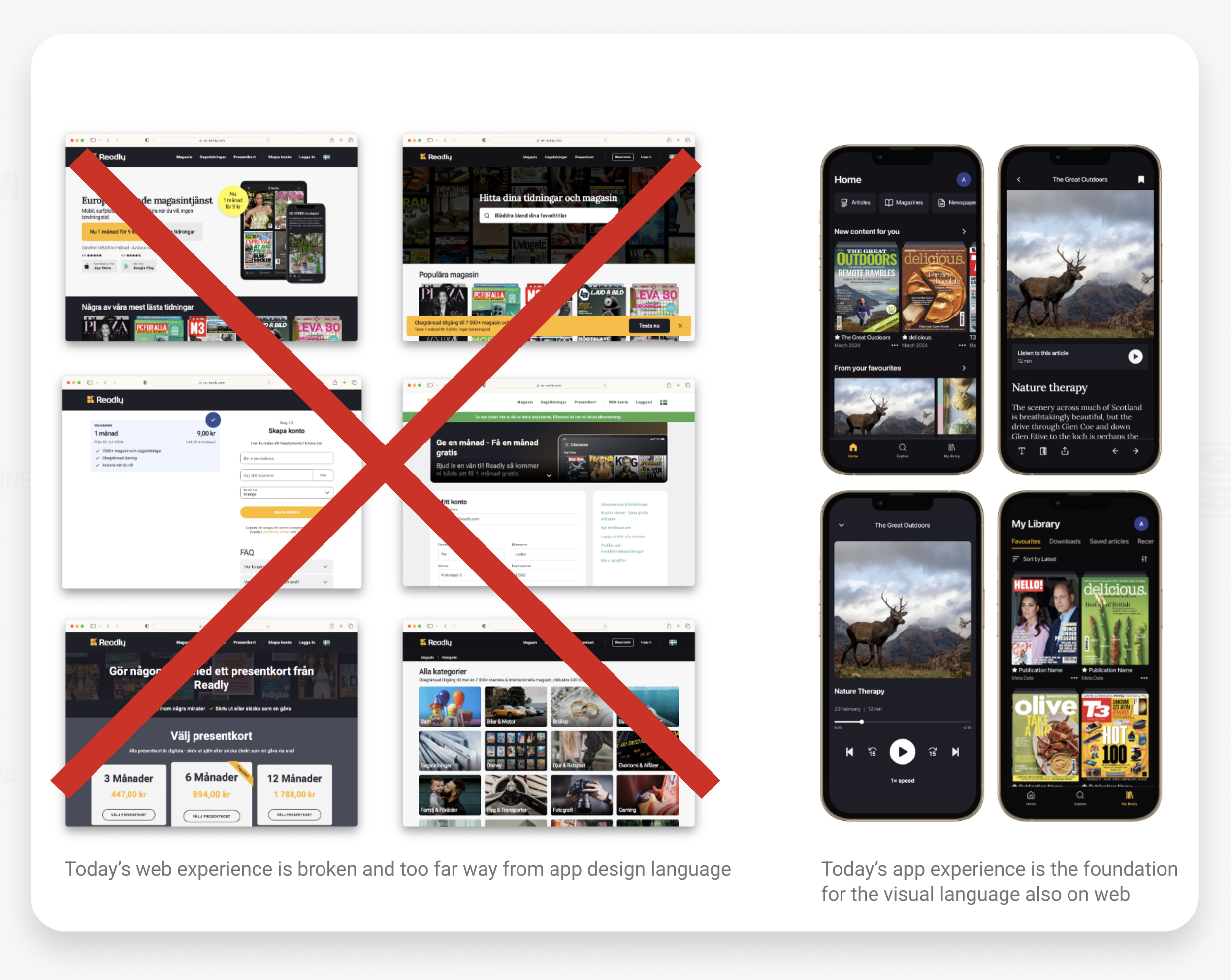
A key focus was establishing a clearer product design direction for the platform.
We introduced a “Design Next Level” initiative to align the experience across mobile and web and raise the overall quality bar. The work focused on:
improving content discovery and navigation
aligning visual language across platforms
strengthening accessibility
consolidating the design system
This created a stronger foundation for scaling product development across teams.
Introducing Continuous Discovery
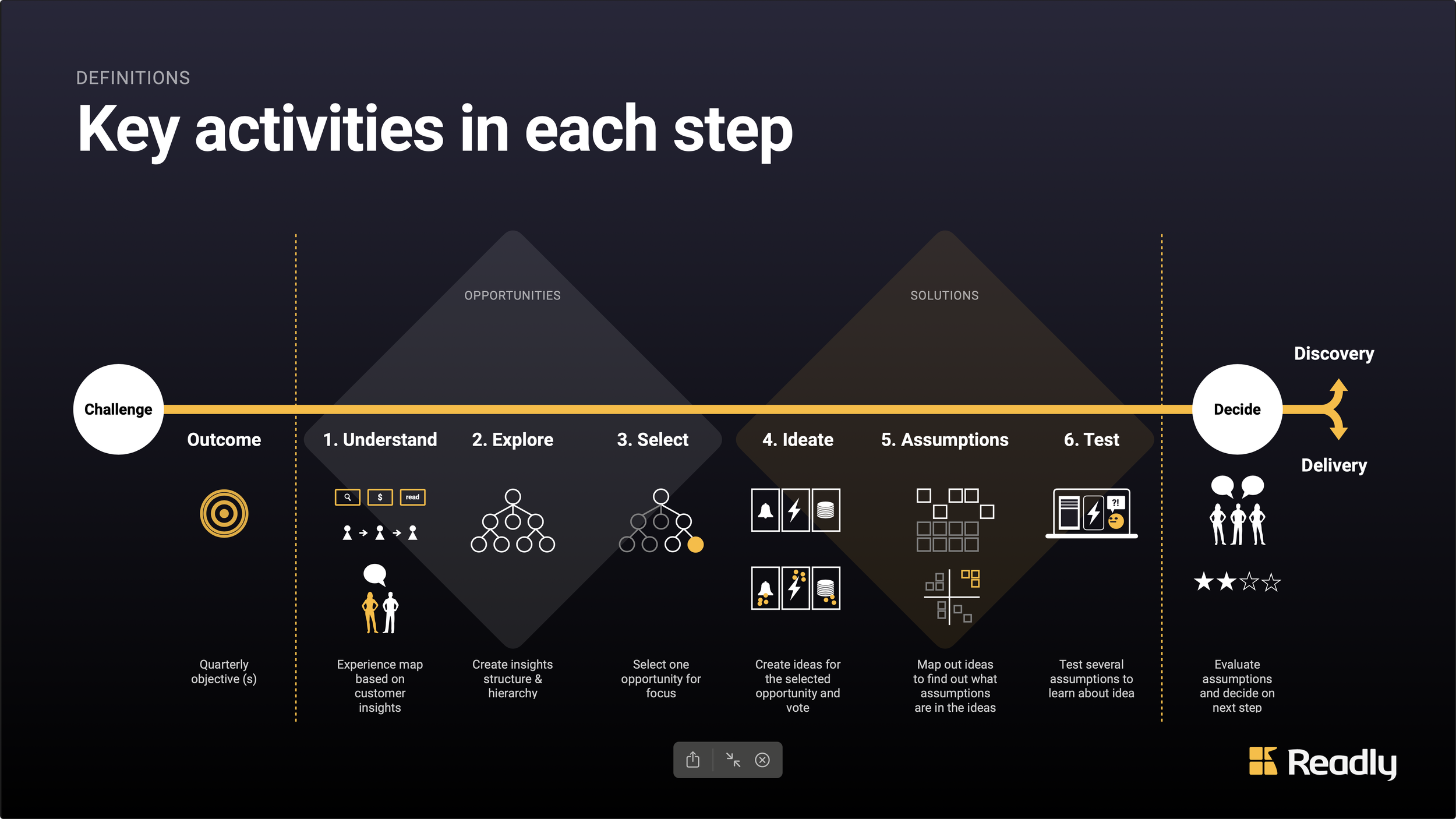
To help teams make better product decisions we developed a continuous discovery playbook used across product teams.
The playbook introduced a shared framework for discovery and experimentation, inspired by continuous discovery practices:
defining product outcomes and opportunities
mapping user journeys and experience gaps
generating and prioritising ideas
testing assumptions through rapid experiments
The goal was to help teams learn faster and validate ideas before investing in development.
Example Initiative: Mobile Experience Evolution
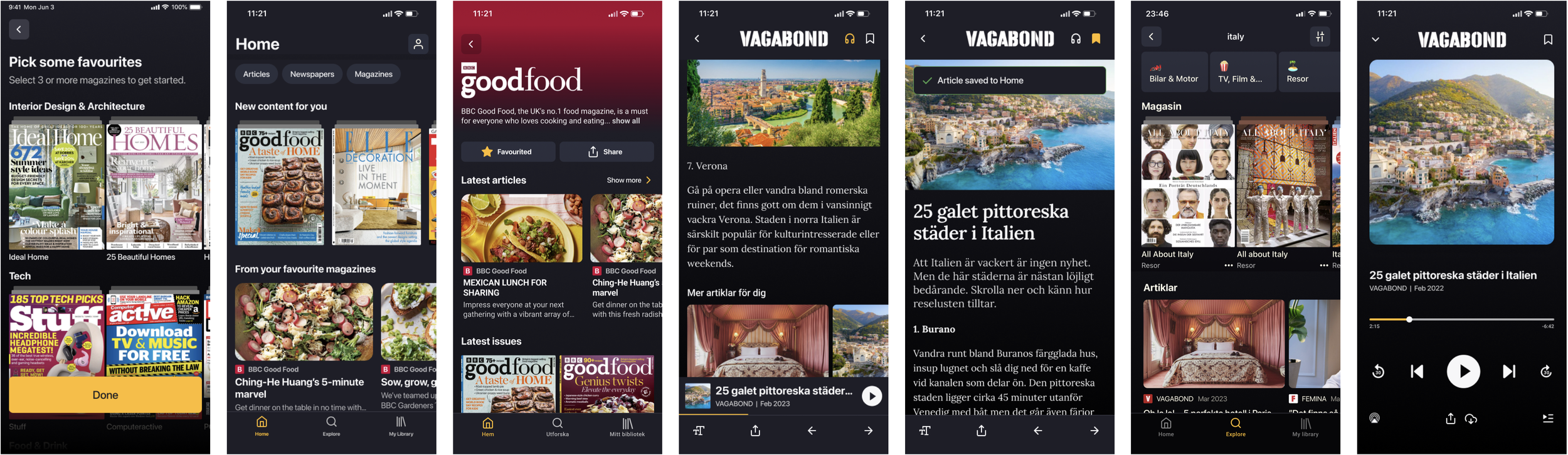
One of the key initiatives during this period was Mobile Fast Track, a product initiative aimed at improving the mobile experience while increasing delivery speed across the product teams.
The initiative explored how the mobile experience could evolve to support article-based reading, improved discovery, personalisation and new content formats such as audio.
Key areas included:
recreating magazine and newspaper content as individual articles
enabling users to save and return to articles more easily
redesigning onboarding to improve personalisation
introducing audio versions of articles using AI-generated narration
Introducing audio versions of articles was a particularly important part of the initiative.
It required defining a completely new capability for the product — both technically and from a user experience perspective — including how audio content should be discovered, consumed and integrated with the reading experience.
To explore this direction I created a vision prototype that demonstrated how article-based reading and audio could work together as part of the mobile experience. The prototype acted as a north-star concept, helping design, product and engineering align on the direction and plan the work across several releases.
Rather than delivering everything at once, the initiative helped structure the work as a sequence of product improvements over multiple releases.
My role in the initiative
I shaped the design direction for the initiative by creating a vision prototype that explored the future mobile experience and helped guide product planning across several releases.
Impact
This work helped strengthen both the product experience and the design capability at Readly.
Key outcomes included:
scaling the design organisation from 3 to 7 designers
establishing stronger product discovery practices across teams
improving alignment between product, engineering and design
creating a clearer foundation for the next generation of the Readly product experience
introducing new product capabilities such as article-based content and audio listening.